Quick answer
for ordinary playful mouthing, make a suitable toy available, keep interaction gentle and pause when the puppy becomes too excited. Protect rest and avoid punishment. Painful, fearful or escalating biting needs professional guidance.
First, make the situation safe
Do not use children to practise a biting lesson. An adult should supervise puppy–child interactions closely, with gates or separate spaces when attention is divided. Keep faces away from the puppy’s mouth and avoid games with bare hands as toys.
This guide is for ordinary puppy play and mouthing. If you see stiff posture, growling over an item, repeated hard bites or fear around handling, stop the interaction and seek a veterinarian and qualified behavior professional. If a bite breaks skin, obtain medical advice.
Prepare before play begins
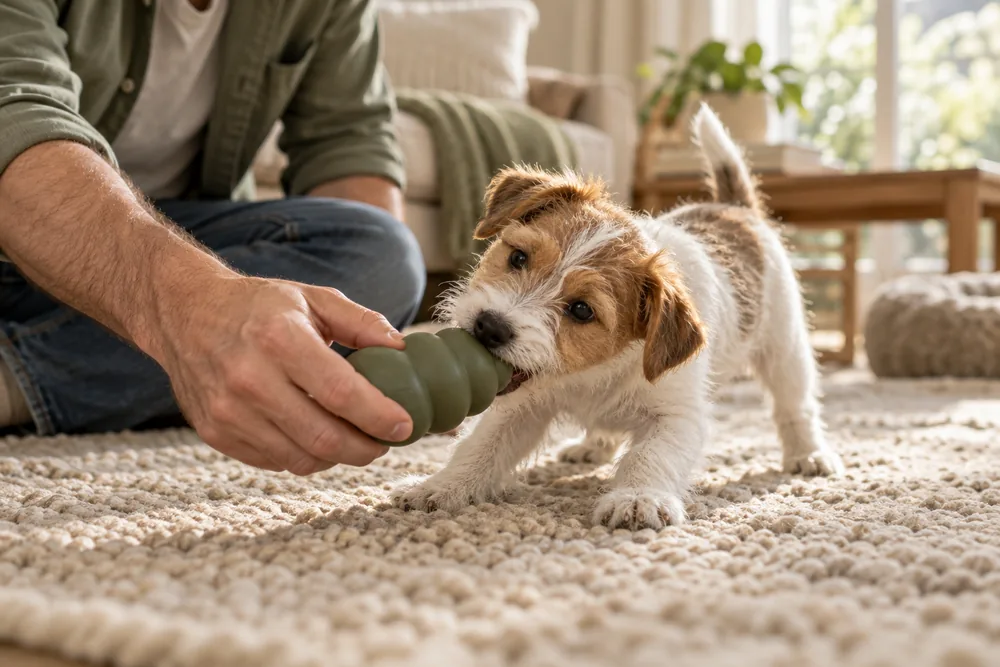
Keep a puppy-appropriate toy nearby, large enough to avoid swallowing. Choose a quiet spot with secure footing and a way to step away safely. Begin when your puppy can engage comfortably, not after an already frantic hour.
Notice which moments lead to biting: moving sleeves, hands near the face, fast running or being picked up. Prevention becomes more specific once you know the pattern.
A simple response sequence
- Offer an appropriate toy before hands become the main target.
- Keep movement gentle and allow pauses.
- If teeth contact skin, calmly stop moving and pause the interaction.
- Create a brief, safe break using space or a barrier if needed. Do not grab, pin or shout.
- Resume only when the puppy is comfortable, or end the game and provide an opportunity to rest.
If the puppy keeps chasing your clothing, repeated redirection may simply continue an exciting game. Shorten the play session next time and use management earlier.
Look beyond the biting moment
A puppy who has been awake through a busy visit may need quiet rather than another lesson. A puppy who bites during touch may be worried or uncomfortable. Respect attempts to move away and investigate the context.
Dogs Trust discusses frustration, fear, social needs and enrichment as relevant considerations for mouthing and biting. One technique cannot cover every reason a puppy uses their mouth.
Common mistakes
Making a loud noise every time: some puppies become more excited. Watch your puppy’s response rather than following a rigid rule.
Holding the mouth shut: physical confrontation can make handling harder and does not teach what to do instead.
Expecting a toy to solve every episode: a toy is useful in play, but it is not a substitute for rest, comfort or help with fear.
Common questions
Will my puppy grow out of it?
Maturation may change the behavior, but safe management and consistent alternatives still matter. Do not wait for escalating or injurious bites to resolve on their own.
Should I use the crate as punishment?
No. Preserve resting spaces as comfortable places. A calm break should not involve forcing a frightened puppy into confinement.